Suleiman the Magnificent: A Legacy of Power, Law, and
Glory
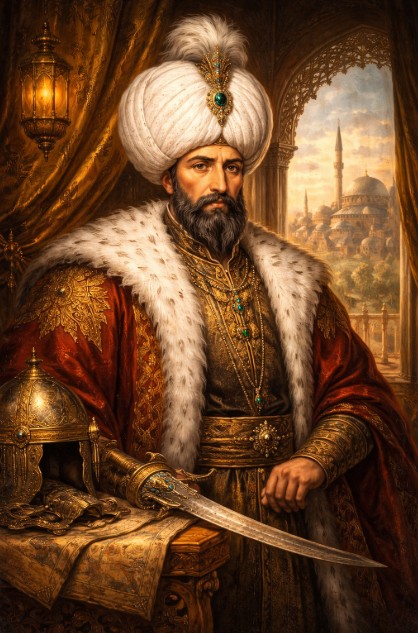
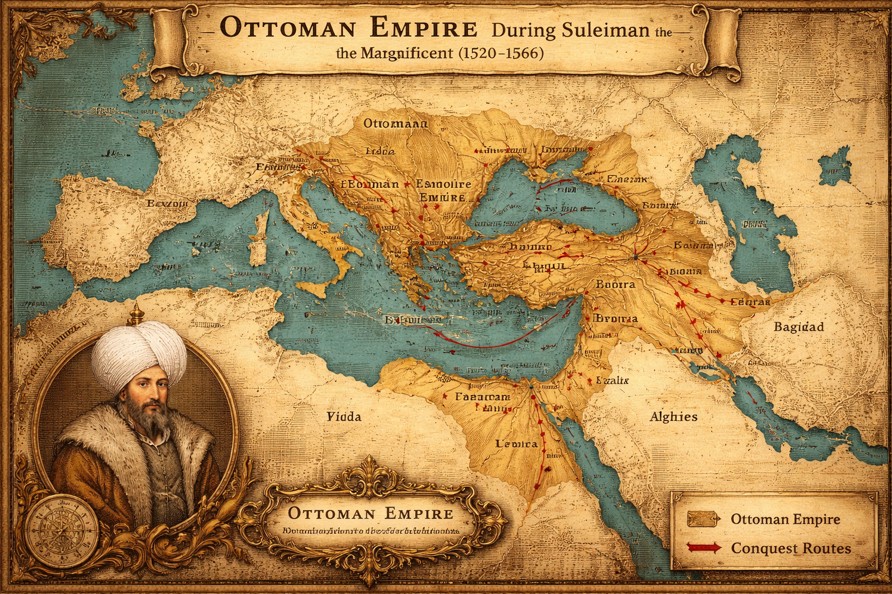
Suleiman the Magnificent represents the most powerful and glorious era of the Ottoman Empire. He
ascended to the throne in 1520, and during his nearly 46-year reign, he brought the empire to its
zenith by achieving significant conquests in both the East and the West. Known in Europe as
"Suleiman the Magnificent," he left his mark on history not only through military triumphs but also
through his fair governance and the structural reforms he introduced to the legal system.
One of his most defining traits was the profound importance he placed on the rule of law within state
administration. For this reason, he is known in the East as "Kanuni" (the Lawgiver). Throughout his
rule, he adopted an approach that protected the rights of the people and prioritized justice,
establishing a robust social order that allowed the Ottoman Empire to remain powerful for centuries.
Suleiman the Magnificent was also a sovereign who deeply valued art and science. A renowned poet
himself, he wrote verses under the pen name "Muhibbi" and left a significant cultural legacy. Under
his patronage, the Ottoman Empire experienced its Golden Age, flourishing not only politically and
militarily but also in architecture, literature, and the arts.
While he led numerous military campaigns that reshaped Europe and cemented the Ottoman Empire as a
global superpower, his greatest legacy remains the system of justice and the resilient state
structure he built, rather than the territories he conquered. Today, Suleiman the Magnificent is
remembered not merely as a sultan, but as a timeless symbol of justice, power, and statesmanship.