Home
MAZUNWORLD

The Legacy of the Ottoman Empire

Explore the fascinating history of one of the world's greatest empires, spanning from its origins in Anatolia to a global superpower that bridged the East and the West for over 600 years.

Foundation Information

Foundation Process
In the late 13th century, Turkmen tribes fleeing Mongol pressure migrated to Anatolia and settled in the western regions. Emerging as a frontier principality (uc beylik) around Söğüt and Domaniç, the Ottomans capitalized on the political and military vulnerabilities of the Byzantine Empire to expand their territories westward. Driven by the ethos of Gaza (holy war) and Jihad, the principality secured the support of the local Turkmen population and the Ahi brotherhoods, rapidly institutionalizing and transforming into a formidable state apparatus.

Phases of the Ottoman Empire

Period of Rise (1453 - 1579)

This era of magnificence began with the conquest of Istanbul and concluded with the death of Grand Vizier Sokullu Mehmed Pasha. During this time, state institutions were firmly established, and the empire's military and economic power achieved an unrivaled global dominance.

Period of Stagnation (1579 - 1699)

In this era, the empire failed to keep pace with the Renaissance and geographical discoveries occurring in Europe. The state was plagued by internal Celali rebellions and the corruption of the Janissary corps, leading to a deceleration and eventual halt in territorial expansion.

Period of Decline (19th Century - 1922)

This phase was a desperate struggle for survival marked by surging nationalist movements, severe territorial losses, economic bankruptcy, and growing foreign dependency. Paradoxically, it was also the era when efforts to modernize education, the military, and the bureaucracy were most intensely pursued.

The Peak of the Ottoman Empire

The absolute zenith of the empire undoubtedly occurred during the era of Kanuni Sultan Süleyman (Suleiman the Magnificent) in the 16th century. In this period, the Ottoman Empire did not merely expand to colossal dimensions militarily (stretching from Central Europe to the Indian Ocean); it simultaneously became the wealthiest state on the globe economically. Rescuing the King of France from captivity, appointing or deposing European monarchs, and establishing an invincible armada on the seas under Hayreddin Barbarossa, the Ottomans also reached cultural and artistic pinnacles with figures like Mimar Sinan in architecture, and Fuzuli and Baki in literature. The beating heart of global politics resided in Istanbul.

Complete Chronological List of Ottoman Sultans

Below is the chronological sequence and fundamental information of the sultans who ruled the Ottoman Empire. (Note: For sultans who ascended the throne multiple times, their initial year of accession is used as the baseline, while their total reign durations are indicated.)*

Sultan Name Year of Accession Birth Year Death Year Reign Duration
Osman Gazi 1299 1258 1326 27 Years
Orhan Gazi 1326 1281 1362 36 Years
Murad I (Hüdavendigar) 1362 1326 1389 27 Years
Bayezid I (The Thunderbolt) 1389 1360 1403 13 Years
Mehmed I (Çelebi) 1413 1389 1421 8 Years
Murad II 1421 1404 1451 30 Years
Mehmed II (The Conqueror) 1451 1432 1481 30 Years
Bayezid II 1481 1447 1512 31 Years
Selim I (The Grim / Yavuz) 1512 1470 1520 8 Years
Suleiman I (The Magnificent / Kanuni) 1520 1494 1566 46 Years
Selim II (The Blond) 1566 1524 1574 8 Years
Murad III 1574 1546 1595 21 Years
Mehmed III 1595 1566 1603 8 Years
Ahmed I 1603 1590 1617 14 Years
Mustafa I 1617 1591 1639 2 Years
Osman II (The Young) 1618 1604 1622 4 Years
Murad IV 1623 1612 1640 17 Years
Sultan Ibrahim 1640 1615 1648 8 Years
Mehmed IV (The Hunter) 1648 1642 1693 39 Years
Suleiman II 1687 1642 1691 4 Years
Ahmed II 1691 1643 1695 4 Years
Mustafa II 1695 1664 1703 8 Years
Ahmed III 1703 1673 1736 27 Years
Mahmud I 1730 1696 1754 24 Years
Osman III 1754 1699 1757 3 Years
Mustafa III 1757 1717 1774 17 Years
Abdulhamid I 1774 1725 1789 15 Years
Selim III 1789 1761 1808 18 Years
Mustafa IV 1807 1779 1808 1 Year
Mahmud II 1808 1785 1839 31 Years
Sultan Abdulmejid I 1839 1823 1861 22 Years
Sultan Abdulaziz 1861 1830 1876 15 Years
Murad V 1876 1840 1904 93 Days
Abdulhamid II 1876 1842 1918 33 Years
Mehmed V (Reşad) 1909 1844 1918 9 Years
Mehmed VI (Vahdeddin) 1918 1861 1926 4 Years

Ottoman Sultans Who Died in Battle or on Campaign

Sultan Name Battle / Campaign Cause of Death Date
Murad I Battle of Kosovo (I) Martyred after being stabbed by a Serbian soldier, Miloš Obilić, while touring the battlefield. 1389
Suleiman I Siege of Szigetvár Passed away in his headquarters from an age-related illness while the army was on campaign and the fortress was under siege. 1566

Ottoman Sultans Who Shaped History

Vahdettin

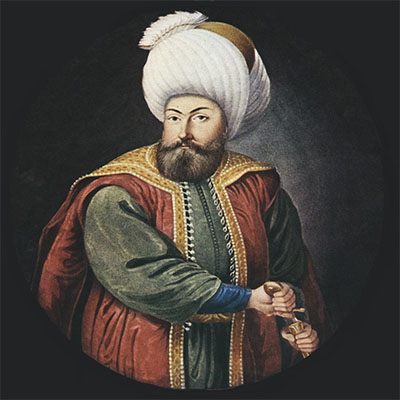
Osman Gazi

1299 - 1326

Full Name: Osman bin Ertuğrul Biography: Born in Söğüt as the son of Ertuğrul Gazi. He united the scattered Turkmen tribes and founded the state that would carry his name. Major Achievements: Declaring independence, establishing military superiority over Byzantine regional lords, and expanding the principality's borders. Historical Perception: Revered as a just, wise, and remarkably humble "founding father".
"Osman Gazi was a humble founding father who laid the foundations of a 600-year state not merely with his sword, but through justice and tolerance."
Vahdettin

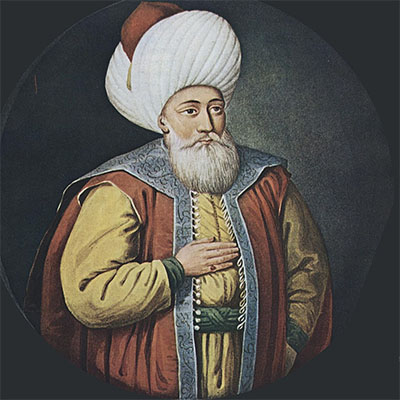
Orhan Gazi

1326 - 1362

Full Name: Orhan bin Osman Biography: The son of Osman Gazi. He successfully institutionalized the tribal structure he inherited from his father. Major Achievements: Establishing the first regular standing army, minting the first Ottoman currency, and securing the strategic crossing into the Balkans. Historical Perception: Regarded as the father of institutionalization and an organizational genius.
"Orhan Gazi is the great architect who transformed a nomadic principality on horseback into a deeply rooted state complete with madrasas, a regular army, and an imperial council (Divan)."
Vahdettin

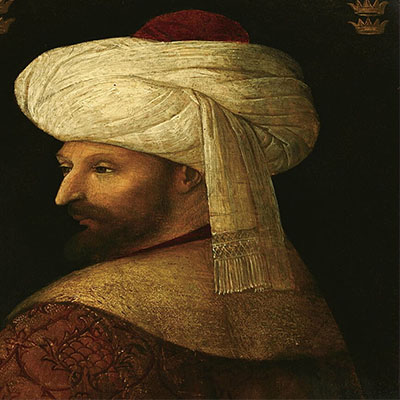
Fatih Sultan Mehmed (The Conqueror)

1451 - 1481

Full Name: Mehmed bin Murad Biography: Returned to power as a mature leader with a vision that would alter the course of world history. Major Achievements: The conquest of Istanbul, subjugating the Balkans and Anatolia, and drafting the first Ottoman code of laws. Historical Significance: Brought the Middle Ages to a close and ushered in the Modern Era.
"Fatih Sultan Mehmed went down in history not merely as a monarch, but as a leader who closed one era and opened another. By conquering Istanbul, he ended the Byzantine Empire and elevated the Ottomans into a global superpower."
Vahdettin

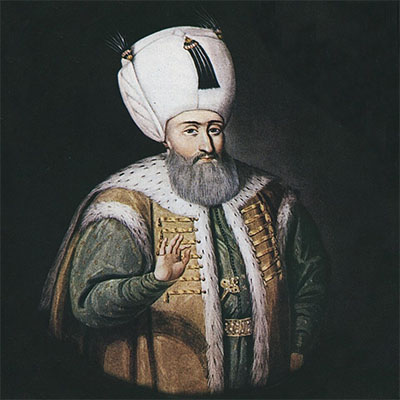
Suleiman I (The Magnificent)

1520 - 1566

Full Name: Süleyman bin Selim Biography: The longest-reigning sultan (46 years). Inheriting a bursting treasury and a formidable army from his father, he brought the world to its knees. Major Achievements: Perfecting the legal system, transforming the Mediterranean into a "Turkish Lake," and steering European politics. Historical Perception: Known as "The Magnificent" in the West and as "Kanuni" (The Lawgiver) in the East.
"Kanuni Sultan Süleyman was an unparalleled universal monarch, hailed as 'The Magnificent' by the West and 'The Lawgiver' by the East, who perfectly combined justice stroke with the sword to seal the Golden Age of the Ottoman Empire."
Vahdettin

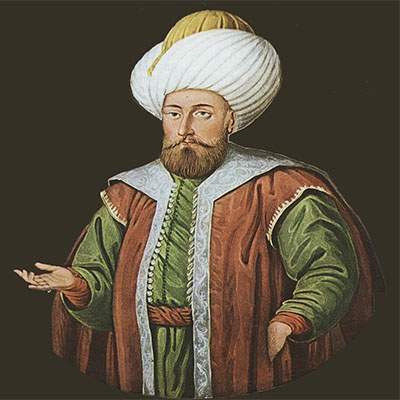
Murad I (Hüdavendigar)

1362 - 1389

Full Name: Murad bin Orhan Biography: The son of Orhan Gazi. By shifting his strategic focus entirely to the Balkans, he transformed the Ottoman realm into a European state. Major Achievements: Conquering Edirne and making it the new capital, and founding the Janissary Corps and the Timar (fief) system. Historical Perception: Immortalized as the "Gazi Hünkar" (Warrior Sovereign), he is renowned as a deeply religious and martial leader.
"Murad I was the martyred sultan who turned the state's gaze westward, initiating the unstoppable Ottoman march deep into Europe."
Vahdettin

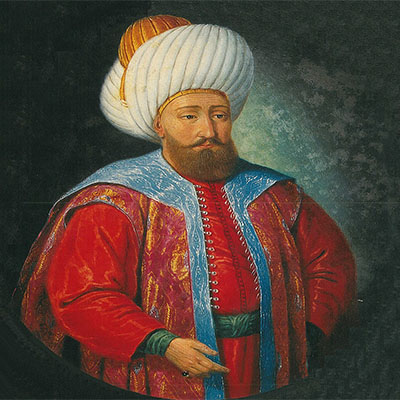
Bayezid I (The Thunderbolt)

1389 - 1402

Full Name: Bayezid bin Murad Biography: The son of Murad I. He ascended to the throne following his father's martyrdom on the battlefield. His exceptional agility and speed earned him the title "Yıldırım". Major Achievements: Largely unifying the Anatolian Turkish political landscape and becoming the first Ottoman sultan to lay siege to Istanbul. Historical Perception: Viewed as a tragic hero who was an outstanding warrior but impulsive in his diplomatic maneuvers.
"Bayezid the Thunderbolt was a courageous warrior who swept across battlefields like a storm, crushing Crusaders, yet ultimately bringing the empire to the edge of the abyss as a victim of his own anger and pride."
Vahdettin

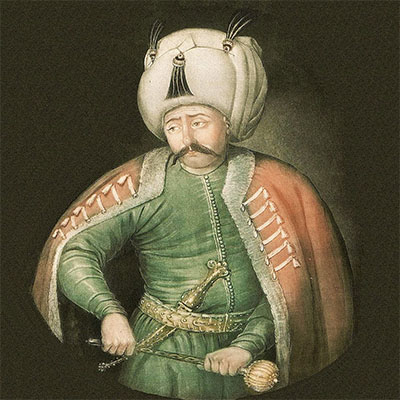
Selim I (The Grim)

1512 - 1520

Full Name: Selim bin Bayezid Biography: Seized the throne by deposing his father, Bayezid II. He accomplished 80 years' worth of work within his brief 8-year reign, directing his ambitions toward the East. Major Achievements: Filling the state treasury, conquering Egypt to transfer the Islamic Caliphate to the Ottomans, and relocating the Sacred Relics to Istanbul. Historical Perception: Known for being remarkably harsh, uncompromising, and possessing extraordinary military genius.
"Yavuz Sultan Selim was a leader of steel will who condensed an entire lifetime and continents into a mere eight years, uniting the Islamic world under a single roof and leaving his son an unrivaled empire."
Vahdettin

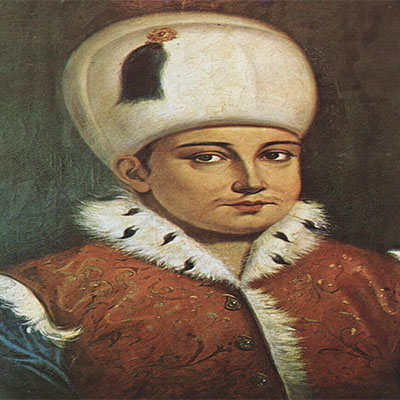
Osman II (The Young)

1618 - 1622

Full Name: Osman bin Ahmed Biography: Ascended the throne at the age of 14. He was the first sultan to recognize the corruption within imperial institutions and attempt radical reforms. Major Achievements: Planning the abolition of the Janissary Corps and breaking palace tradition by marrying outside the imperial household. Historical Perception: A tragic reformist whose ideas were ahead of his time, yet whose inexperience dragged him to a catastrophic end.
"Young Osman was the empire's most tragic and visionary young soul, daring to perceive and change a decaying system, yet paying the ultimate price for his inexperience with his life."
Vahdettin

Murad IV

1623 - 1640

Full Name: Murad bin Ahmed Biography: The state was engulfed in anarchy when he took the throne at age 11. Upon coming of age and seizing real power, he ruled with an iron fist and ruthlessly restored authority. Major Achievements: Suppressing the Celali rebellions, restoring public order, and reviving the tradition of the sultan personally leading the army on campaigns. Historical Perception: The last great warrior sultan. Viewed as an authoritarian, terrifying savior who pulled the state back from the brink.
"Murad IV was the last great conqueror who tamed an empire shaken by rebellion and chaos with his iron fist, conquered Baghdad, and held the state together through sheer terror."
Vahdettin

Abdulhamid II

1876 - 1909

Full Name: Abdülhamid bin Abdülmecid Biography: Ascended the throne during the empire's most turbulent period, plagued by insurmountable debt and peak territorial losses. Kept the state afloat for 33 years using complex balance politics. Major Achievements: The Hejaz Railway project, establishing telegraph networks, opening modern schools, and instituting the policy of Islamism (Pan-Islamism). Historical Perception: Celebrated as the "Great Khan" (Ulu Hakan) by supporters, yet condemned as the "Red Sultan" by opponents due to his oppressive administration.
"Abdulhamid II was an intelligent and lonely leader who, like a chess master in a world resembling a wolf pack, kept a crumbling empire standing for 33 years."
Vahdettin

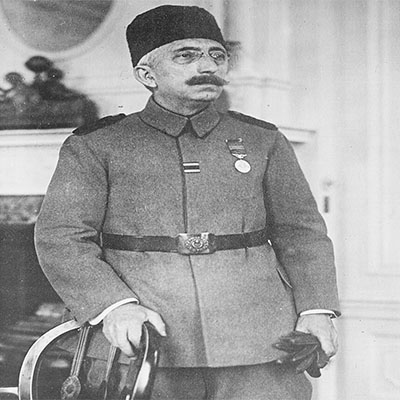
Mehmed VI (Vahdeddin)

1918 - 1922

Full Name: Mehmed Vahdeddin bin Abdülmecid Biography: Took the throne during the most disastrous days of World War I. Both the Armistice of Mudros and the Treaty of Sèvres were signed during his reign. Major Achievements: His entire reign was spent under foreign occupation; he dispatched Mustafa Kemal Pasha to Anatolia as an inspector. Historical Perception: Condemned as a defeatist and a "traitor" by official history and a segment of the public, while considered by others as a powerless victim.
"Vahdettin was the final leaf of a colossal 600-year-old plane tree; he ascended the throne in a country turned to ashes, and departed as the last sultan, serving as the ultimate symbol of destruction and despair."

Chronological Table of Major Battles

Date Battle Sultan Outcome and Significance
1389 First Battle of Kosovo Murad I Decisive Ottoman victory. The gates of the Balkans were fully opened.
1396 Battle of Nicopolis Bayezid I (The Thunderbolt) The Crusader army was annihilated. Europe's hopes of expelling the Ottomans were crushed.
1453 Siege of Istanbul Fatih Sultan Mehmed Byzantium fell. The Middle Ages ended, and the imperial era commenced.
1514 Battle of Chaldiran Selim I (The Grim) The Safavid threat was neutralized, securing Eastern Anatolia.
1526 Battle of Mohács Suleiman I (The Magnificent) Lasted a mere two hours. The Kingdom of Hungary was erased from history.
1683 Second Siege of Vienna Mehmed IV Severe defeat. Marked the beginning of the Ottoman withdrawal from Europe.

Top 5 Most Successful Sultans Ranking

  1. Fatih Sultan Mehmed: Ranked first because he did not simply conquer territories; he elevated the state into a genuine world empire format through science, art, and his profound vision.
  2. Suleiman the Magnificent: Ranked second because he consolidated state power, systematized the law, and governed the Ottoman realm as a global superpower for the longest duration.
  3. Selim I (Yavuz Sultan Selim): Ranked third because his economic brilliance and military rapidity saved the state from bankruptcy, overflowing the treasury and extending the empire's lifespan for centuries.
  4. Murad I: Ranked fourth for establishing the critical administrative and military backbone (the Janissaries and the Timar system) that guaranteed the state's permanence.
  5. Orhan Gazi: Ranked fifth because he took a nomadic tent-state and successfully morphed it into a settled, institutionalized entity.

The Most Controversial Ottoman Sultans

⚖️

Abdulhamid II

He represents the sharpest division among historians. One faction reveres him as a genius "Great Khan" who preserved the empire through pure intellect, while the opposing faction views him as an "oppressive dictator" due to his dissolution of parliament and vast intelligence network.

Mehmed VI (Vahdettin)

His failure to launch active resistance against the occupation and departure on a British battleship spawned a demographic that brands him a "traitor." Defenders argue he was without an army, powerless, and acted to prevent further bloodshed.

🔥

Osman II (Genç Osman)

Despite his well-intentioned reformist nature, his stubborn clashes with his own army make him a highly controversial figure, split between being remembered as a hero striving to save the state, and a youth whose impulsive decisions dragged the realm into chaos.

Ottoman Sultans & Throne Successions

Below is the complete chronological list of all the Ottoman sultans and throne successions, summarizing the reasons for their accession and departure from the throne in short and clear sentences:

Sultan's Name Year of Accession End of Reign Reason for Accession Reason for End of Reign / Departure
Osman I (Gazi) 1299 1326 Being the founder of the principality. Passed away from natural causes (old age/gout).
Orhan Gazi 1326 1362 Took over the principality upon his father's death. Passed away from natural causes.
Murad I 1362 1389 The death of his father. Martyred on the battlefield during the First Battle of Kosovo.
Bayezid I (The Thunderbolt) 1389 1402 Ascended the throne on the battlefield upon his father's martyrdom. Captured by Timur in the Battle of Ankara and died in captivity. (Note: The period between 1402-1413 is the Ottoman Interregnum, where the throne remained vacant.)
Mehmed I (Çelebi) 1413 1421 Won the struggle for the throne against his brothers (Ottoman Interregnum) and united the state. Passed away from natural causes.
Murad II (1st Reign) 1421 1444 The death of his father. Voluntarily left the throne to his son, believing he had secured the borders.
Mehmed II (1st Reign) 1444 1446 His father's abdication (he was 12 years old). Recalled his father to the throne due to the Crusader threat and the Buçuktepe Rebellion.
Murad II (2nd Reign) 1446 1451 Returned at the insistence of statesmen to suppress internal turmoil. Passed away from natural causes.
Mehmed II (The Conqueror) (2nd Reign) 1451 1481 Ascended the throne for his permanent reign upon his father's death. Passed away from natural causes while on a campaign (there are also suspicions of poisoning).
Bayezid II 1481 1512 The death of his father (he won the struggle against his brother Cem Sultan). Abdicated the throne under pressure from his son Selim I (Yavuz) and the Janissaries.
Selim I (The Grim) 1512 1520 Took power by forcing his father to abdicate. Passed away due to an anthrax (şirpençe) infection.
Süleyman I (The Magnificent) 1520 1566 The death of his father (ascended unopposed as the only male child). Passed away from natural causes at the headquarters during the Siege of Szigetvár.
Selim II (The Blond) 1566 1574 The death of his father. Passed away from complications after falling and injuring himself in the bathhouse.
Murad III 1574 1595 The death of his father. Passed away from natural causes (paralysis/stomach ailment).
Mehmed III 1595 1603 The death of his father. Passed away from natural causes (heart attack or stomach ailment).
Ahmed I 1603 1617 The death of his father. Passed away from natural causes due to typhus.
Mustafa I (1st Reign) 1617 1618 The death of his brother (ascended through the Seniority system as the eldest member of the dynasty). Dethroned by the decision of state officials due to his mental instability.
Osman II (The Young) 1618 1622 The dethronement of his uncle, Mustafa I. Dethroned by a Janissary Rebellion and murdered in the Yedikule Dungeons.
Mustafa I (2nd Reign) 1622 1623 Re-enthroned by force by the rebels who murdered Osman II. Permanently dethroned by a fatwa from the Sheikh al-Islam due to chaos in the administration.
Murad IV 1623 1640 The dethronement of his uncle, Mustafa I (ascended the throne at the age of 11). Passed away due to cirrhosis.
Sultan Ibrahim 1640 1648 Ascended as the sole male heir of the dynasty upon his brother's death. Dethroned as a result of a rebellion and strangled shortly after.
Mehmed IV (The Hunter) 1648 1687 The dethronement of his father (ascended the throne at the age of 7). Dethroned by an army rebellion due to military defeats following the Second Siege of Vienna.
Süleyman II 1687 1691 The dethronement of his brother, Mehmed IV. Passed away due to kidney failure / edema (dropsy).
Ahmed II 1691 1695 The death of his brother. Passed away from natural causes.
Mustafa II 1695 1703 The death of his uncle. Dethroned by a major rebellion known as the "Edirne Event".
Ahmed III 1703 1730 Placed on the throne after his brother was dethroned by a rebellion. Forced to abdicate by the Patrona Halil Rebellion.
Mahmud I 1730 1754 His uncle Ahmed III abdicated at the demand of the rebels. Passed away from natural causes (suffered a heart attack on the way back from Friday prayers).
Osman III 1754 1757 The death of his brother (ascended after waiting in the "cage" for 50 years). Passed away after suffering a stroke.
Mustafa III 1757 1774 The death of his cousin. Passed away from heart failure.
Abdülhamid I 1774 1789 The death of his brother. Passed away from a stroke upon receiving the news that the Ochakiv Fortress had fallen to the Russians.
Selim III 1789 1807 The death of his uncle. Dethroned by the Kabakçı Mustafa Rebellion, which opposed his Nizam-ı Cedid (New Order) army.
Mustafa IV 1807 1808 Ascended the throne with the support of the rebels who overthrew Selim III. Dethroned by Alemdar Mustafa Pasha's coup.
Mahmud II 1808 1839 Rescued from the rebels and placed on the throne during Alemdar Pasha's coup. Passed away due to tuberculosis.
Sultan Abdülmecid 1839 1861 The death of his father. Passed away due to tuberculosis.
Sultan Abdülaziz 1861 1876 The death of his brother. Dethroned by a military/political coup (died under suspicious circumstances shortly after).
Murad V 1876 1876 His uncle was dethroned by a coup. Dethroned after 93 days due to extreme stress and mental breakdown.
Abdülhamid II 1876 1909 The dethronement of his brother (ascended with the promise to declare a constitutional monarchy). Dethroned by parliamentary decision and pressure from the Committee of Union and Progress following the 31 March Incident.
Mehmed V (Reşad) 1909 1918 His older brother Abdülhamid II was dethroned by a parliamentary decision. Passed away from natural causes due to heart failure.
Mehmed VI (Vahdeddin) 1918 1922 The death of his older brother. His sultanate officially ended with the abolition of the Sultanate by the TBMM (Turkish Grand National Assembly) on November 1, 1922.